


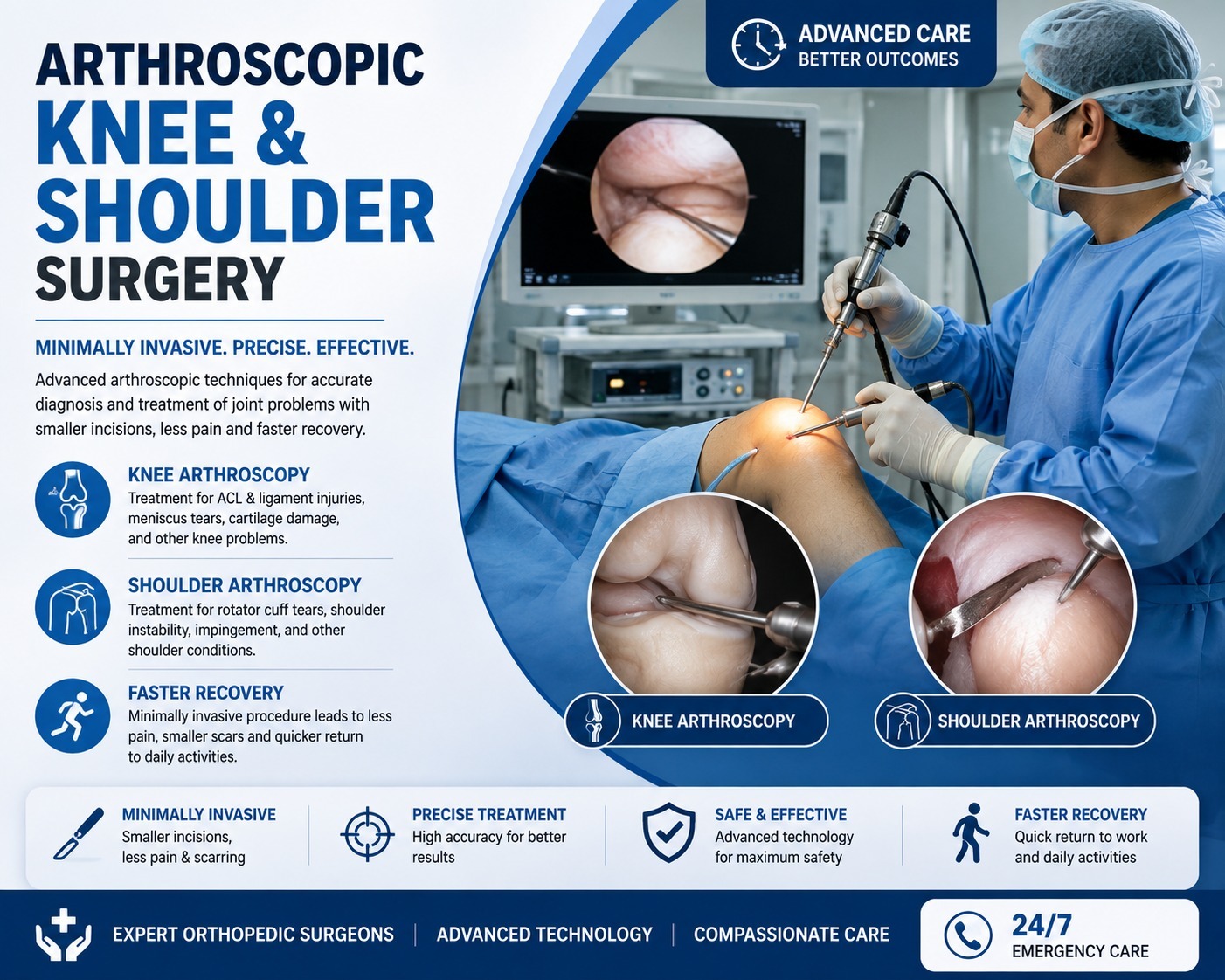
Knee and shoulder pain are common orthopedic complaints, but the underlying causes can be very different. A knee that hurts while climbing stairs does not necessarily have the same problem as a knee that suddenly gives way during sport. Similarly, shoulder pain after lifting an object needs to be interpreted differently from gradually increasing stiffness without a specific injury.
Understanding the pattern of symptoms can help patients describe their problem more clearly during an orthopedic consultation.
Knee pain may arise from structures such as cartilage, menisci, ligaments, tendons, muscles, or the joint surfaces themselves. Age-related changes are one possible cause, but younger people can also experience knee pain because of sports injuries, overuse, kneecap-related problems, or trauma.
Useful observations include whether the knee:
- Swells after activity
- Locks or catches
- Gives way unexpectedly
- Hurts during stairs or squatting
- Becomes stiff after prolonged sitting
- Cannot fully straighten or bend
- Developed pain immediately after twisting
A sudden twisting injury followed by swelling and instability may require evaluation for ligament or meniscal damage. Gradually developing discomfort during weight-bearing activities may have a different cause and treatment pathway.
The shoulder is an exceptionally mobile joint, and that mobility depends on coordinated function between bones, muscles, tendons, ligaments, and surrounding structures. Shoulder problems can therefore produce pain in different movements.
Patients may notice difficulty lifting the arm overhead, reaching behind the back, sleeping on one side, carrying objects, or performing repetitive work. Some experience weakness rather than severe pain. Others develop considerable stiffness.
Shoulder symptoms can be associated with tendon problems, rotator cuff injuries, instability, frozen shoulder, arthritis, fractures, dislocation, or other conditions. Pain that travels down the arm can sometimes also originate from the neck, which is one reason a clinical assessment is useful.
For patients in Pune, Maharashtra, the appropriate investigation depends on the symptoms and examination findings. X-rays can provide useful information about bones and joint surfaces. Ultrasound or MRI may be considered when particular soft-tissue structures need further evaluation.
Treatment does not automatically mean surgery. Many knee and shoulder conditions can initially be treated through activity modification, medication when appropriate, physiotherapy, targeted strengthening, or other conservative measures. Surgical options may be considered when structural damage is significant, function remains restricted, instability persists, or non-surgical treatment has not produced adequate improvement.
Isha Trauma Care in Pune provides orthopedic assessment for knee and shoulder conditions, including injuries that may require arthroscopy or other surgical management. Treatment decisions are generally guided by diagnosis, severity, activity level, age, functional limitations, and patient expectations.
Patients can help their consultation by noting when symptoms began, which movements make them worse, whether an injury occurred, and whether swelling, weakness, locking, or instability is present.
Knee and shoulder pain should therefore be approached according to its pattern rather than treated as a single condition. Identifying the source of symptoms is the first step toward choosing an appropriate plan for restoring comfortable movement and everyday function.