


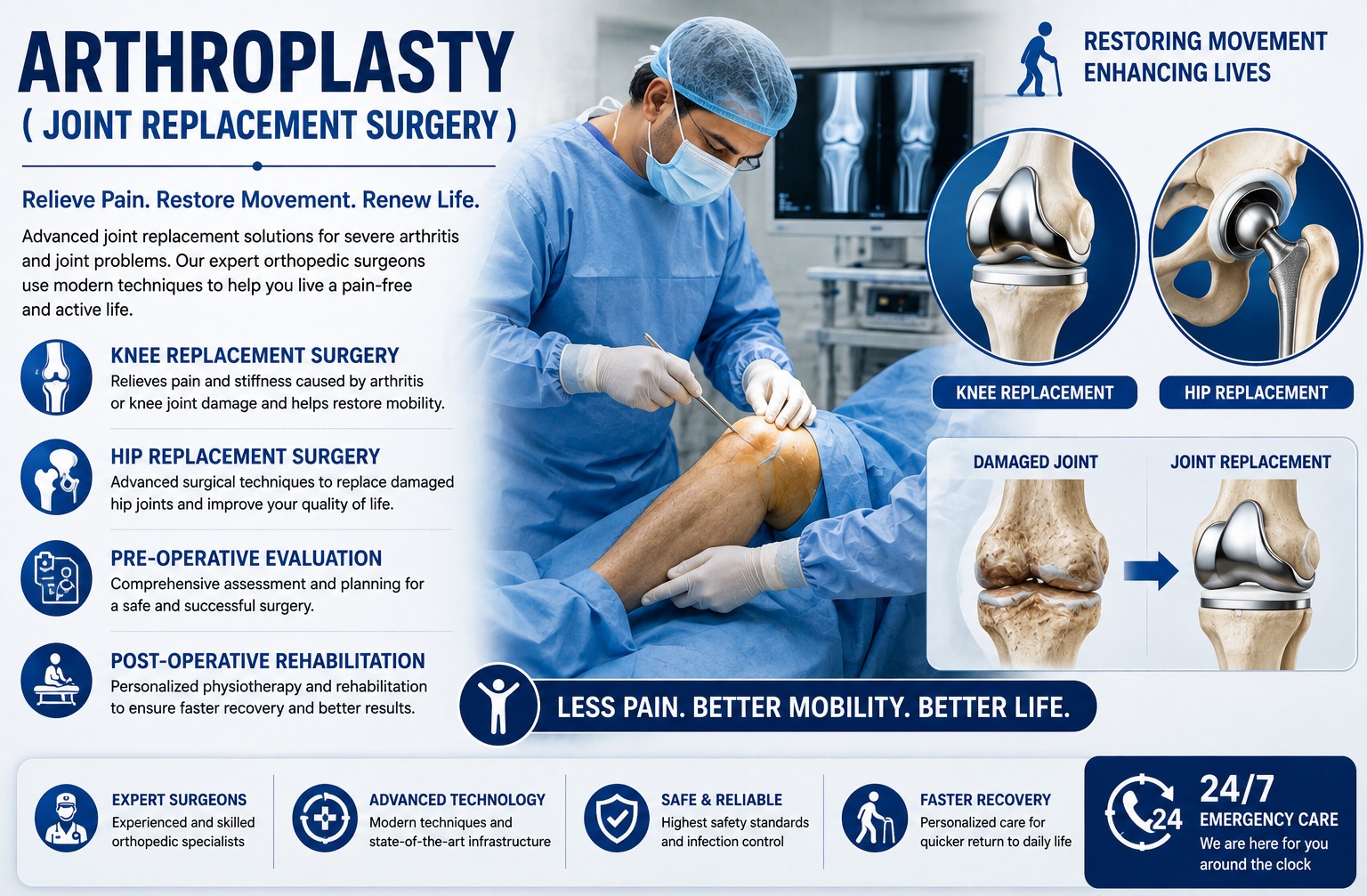
Knee replacement is usually not the first treatment offered for knee pain. Many people live with arthritis or other degenerative knee conditions for years using exercise, physiotherapy, medication, activity modification, weight management, or other treatments. The question of surgery becomes more relevant when pain and loss of function continue despite appropriate conservative care.
Patients considering knee arthroplasty in Pune should focus on functional readiness and clinical need rather than age alone.
One useful question is: How much is the knee affecting normal life?
Possible indicators that it may be time to discuss joint replacement include persistent difficulty walking, increasing problems with stairs, pain during routine activities, substantial stiffness, reduced independence, and symptoms that interfere with sleep or quality of life.
The next question is whether the symptoms correspond with significant structural joint damage. X-rays are commonly used to evaluate arthritis and changes in the joint.
However, imaging should not be considered separately from symptoms. Severe-looking arthritis on an X-ray does not automatically mean that immediate surgery is necessary if the person remains reasonably comfortable and functional.
Patients should also review which conservative treatments have already been tried. This does not mean every possible treatment must be exhausted indefinitely. Instead, the orthopedic surgeon can assess whether further non-surgical management is likely to provide meaningful benefit.
When knee replacement becomes a reasonable option, preparation should include several areas.
Understand the proposed procedure. Ask whether a total or another type of knee arthroplasty is being considered and why it suits the pattern of joint damage.
Discuss realistic outcomes. The goal is generally to improve pain and function, but individual recovery and final mobility vary.
Prepare for rehabilitation. Exercises and progressive walking are typically important components of recovery. Patients need to understand the expected rehabilitation commitment.
Review general health. Medical conditions and medications may influence surgical planning and should be discussed before an elective procedure.
Plan for the first weeks at home. Temporary help with transport, meals, household activities, or stairs may be useful depending on mobility.
At Isha Trauma Care in Pune, patients with persistent knee problems can undergo orthopedic evaluation to understand whether continued conservative treatment or surgical management such as arthroplasty is appropriate.
Choosing a hospital or orthopedic team for joint replacement should involve more than asking how quickly surgery can be scheduled. Patients can discuss the diagnosis, procedure, anaesthesia, hospital stay, pain management approach, rehabilitation, follow-up, possible complications, and expected progression toward everyday activities.
There is also no single recovery timeline that applies to everyone. Age, muscle strength, general health, preoperative mobility, the procedure performed, and rehabilitation progress can all influence recovery.
Knee replacement is therefore best considered when three elements come together: significant joint disease, meaningful limitation in everyday life, and inadequate improvement from reasonable non-surgical treatment.
For patients in Pune evaluating whether they are ready for knee arthroplasty, a detailed orthopedic consultation can turn a broad question such as "Do I need knee replacement?" into a more useful discussion about diagnosis, available options, expected benefits, risks, and personal recovery goals.