
The right category depends first on what needs to change: a wound, loss of movement, pain, deformity, or a feature that is otherwise healthy but does not match your appearance goals. By separating functional needs from appearance-focused goals, then checking timing, risks, credentials, and costs, you can arrive at a more useful surgical consultation.
Key takeaways
- Reconstructive surgery restores function, protection, tissue, or form after a health problem.
- Cosmetic surgery changes a normal feature for an appearance-focused goal.
- Seek urgent assessment for severe trauma, bleeding, exposed tissue, or loss of movement.
- Compare a surgeon’s relevant experience, hospital facilities, emergency support, and follow-up plan.
Start with the problem, not the procedure name
The deciding question is whether you are repairing a health problem or changing a normal feature for appearance. Reconstructive surgery restores tissue, movement, protection, or form after trauma, burns, infection, congenital differences, cancer treatment, or previous surgery. Cosmetic surgery changes an otherwise normal feature for an appearance-focused goal.
| Category | Main aim | Examples |
|---|---|---|
| Reconstructive | Close wounds, restore movement, provide coverage, and protect bone, tendon, nerve, blood vessel, or hardware | Skin grafts, flap surgery, tendon or nerve repair, hand reconstruction, breast reconstruction |
| Cosmetic | Improve appearance when function and tissue protection are not the primary problem | Rhinoplasty, blepharoplasty, abdominoplasty, liposuction, breast augmentation |
| Either | The purpose and symptoms determine the category | Scar revision or breast reduction |
A scar revision after a burn that restricts movement is reconstructive; revising a harmless scar only to make it less noticeable is usually cosmetic. Breast reduction is reconstructive when breast weight causes pain, skin problems, or limits activity, and cosmetic when the goal is appearance alone.
If you are searching for plastic reconstructive or cosmetic surgery in Pune, describe the problem before naming a procedure. An exposed bone, joint, tendon, nerve, blood vessel, or orthopedic implant needs prompt evaluation for wound coverage and function, not an appearance-only consultation. Complex injuries may require cleaning, fracture stabilization, temporary coverage, and later staged reconstruction.
Plastic surgery in Pune should be chosen after you identify whether your priority is wound closure, movement, protection, pain relief, symmetry, or appearance.
Know when trauma reconstruction needs urgent or staged care
An injury with exposed bone, tendon, joint, nerve, blood vessel, or orthopedic hardware needs urgent trauma assessment, not a cosmetic consultation. If you are searching for plastic reconstructive or cosmetic surgery in Pune, identify the wound and functional risk before choosing a procedure name.
- Emergency teams clean the wound and remove dead or infected tissue. Delaying this step allows contamination and infection to spread.
- Orthopedic trauma specialists stabilize the fracture and assess blood flow to the limb. A damaged artery or unstable bone changes the reconstruction plan.
- Surgeons provide temporary coverage when definitive closure is unsafe because swelling, contamination, or tissue loss remains. This protects exposed structures while the wound declares its condition.
- After swelling and infection risk are controlled, the team plans definitive coverage with a graft, flap, or another reconstructive method. Open-fracture coverage requires coordination between orthopedic trauma and reconstructive plastic-surgery teams; delaying coverage can increase complications.
- Later operations may release a tight scar, restore tendon or nerve function, improve contour, or revise the reconstruction. One operation is not always a realistic goal in reconstructive surgery in Pune or elsewhere.
Seek emergency care for increasing pain, spreading redness, foul drainage, fever, pale or cold fingers or toes, numbness, or loss of movement. Smoking, diabetes, poor nutrition, vascular disease, and some medicines can further alter timing and healing.
Use your symptoms and daily limitations to classify the goal
Record what the problem stops you from doing before choosing a surgical category. Note pain, restricted movement, wound breakdown, drainage, visible deformity, asymmetry, numbness, or breathing difficulty, plus effects on walking, gripping, dressing, work, sleep, and exercise.
Write down:
- Which symptoms are worsening, and when they began
- Which daily activities you avoid or perform differently
- Whether your priority is function, wound protection, symmetry, or appearance
| Primary concern | Reconstructive signal | Cosmetic signal |
|---|---|---|
| Main goal | Restore coverage, movement, limb salvage, or hardware protection | Change the appearance of an otherwise healthy feature |
| Trade-off | Contour may remain imperfect if closure or function is safer | Scars, downtime, risk, cost, and revision must justify the visual improvement |
| Typical decision | Pain, deformity, numbness, drainage, or activity limits dominate | Dissatisfaction with shape or symmetry dominates without functional loss |
Dominant functional problems point toward reconstructive surgery in Pune; appearance-only concerns point toward cosmetic surgery in Pune. Both goals can exist together, so state which one matters most.
A reconstruction may accept an uneven contour to save a limb or protect bone and hardware, while cosmetic surgery still carries bleeding, infection, blood-clot, anesthesia, healing, numbness, asymmetry, and revision risks.
Tell the surgeon about smoking or tobacco use, poorly controlled diabetes, poor nutrition, obesity, vascular disease, and relevant medicines. These factors can delay healing or change timing; hiding them to secure an operation date increases danger.
Prepare for a consultation that tests the plan
Do not consent until the consultation gives you a written plan, not just a procedure name. It must state the diagnosis, primary goal, alternatives including no treatment, expected scars, sensation changes, limits of symmetry, complications, anesthesia, hospital stay, recovery restrictions, revision risk, and total cost.
| Ask about | Why it matters |
|---|---|
| Infection or wound breakdown | Know who treats it and where |
| Revision | Know what happens if the result is unsatisfactory |
| Staged treatment | Identify costs for implants, admissions, later operations, and follow-up |
Bring injury photographs, previous operation notes, imaging, a medication list, allergy history, smoking or tobacco details, diabetes status, and written desired outcomes. Ask how each health factor changes timing, healing, or eligibility.
Cosmetic surgery is still surgery. Bleeding, infection, blood clots, anesthesia complications, wound-healing problems, numbness, asymmetry, and an unsatisfactory appearance remain possible, including after “minimally invasive” or day-care procedures. A guaranteed result or pressure to book immediately is a warning sign.
If you are comparing plastic surgery in Pune or cosmetic surgery in Pune, ask for complication rates relevant to the proposed operation and a written estimate covering:
- Surgeon and facility fees
- Anesthesia, tests, medicines, implants, and admission
- Follow-up, staged procedures, and revision care
Insurance coverage is separate from medical necessity. Obtain written confirmation before assuming reconstructive treatment, implants, staged procedures, or revisions are covered.
Compare a Pune surgeon and facility, not just a location
Compare credentials and systems, not a pin on the map. A plastic surgeon in Kharadi and a surgeon elsewhere in Pune should meet the same checks before you choose plastic surgery in Pune, reconstructive surgery in Pune, or cosmetic surgery in Pune.
| Check | Ask for or verify | Why it matters |
|---|---|---|
| Registration | National Medical Commission or Maharashtra Medical Council registration; use the Indian Medical Register and Maharashtra Medical Council as starting points | Confirms legal registration to practise |
| Training | Recognized postgraduate plastic-surgery qualification, such as MCh or DNB, confirmed against official records | “Plastic” in an advertisement is not specialty training |
| Experience | Number and recency of the exact operation, including complications and revisions | Breast reconstruction, tendon repair, rhinoplasty, and flap surgery require different experience |
| Facility | Hospital privileges, operating-facility accreditation, named anesthetist, blood access, and emergency transfer arrangements | A clinic consultation does not prove safe operative support |
| Follow-up | Local wound reviews, after-hours contact, infection management, and revision planning | Problems often appear after discharge |
| Consent | Written diagnosis, alternatives, scars, risks, anesthesia, recovery, total cost, and staged-procedure plan | You need a record of what you agreed to |
Ask to see consented before-and-after cases matching your condition, not selected advertising images. A local option such as Isha Trauma Care Hospital should be assessed against this same surgeon, team-coordination, emergency, consent, and follow-up checklist; Kharadi’s address proves neither expertise nor safety.
Insurance is a separate question from medical necessity. Obtain written confirmation covering reconstructive indications, implants, staged procedures, revisions, exclusions, preauthorisation, and network status. Purely cosmetic surgery is commonly excluded.
Related service
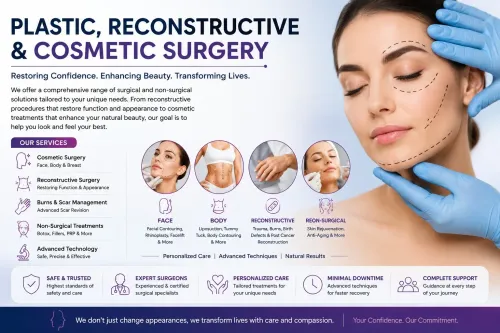
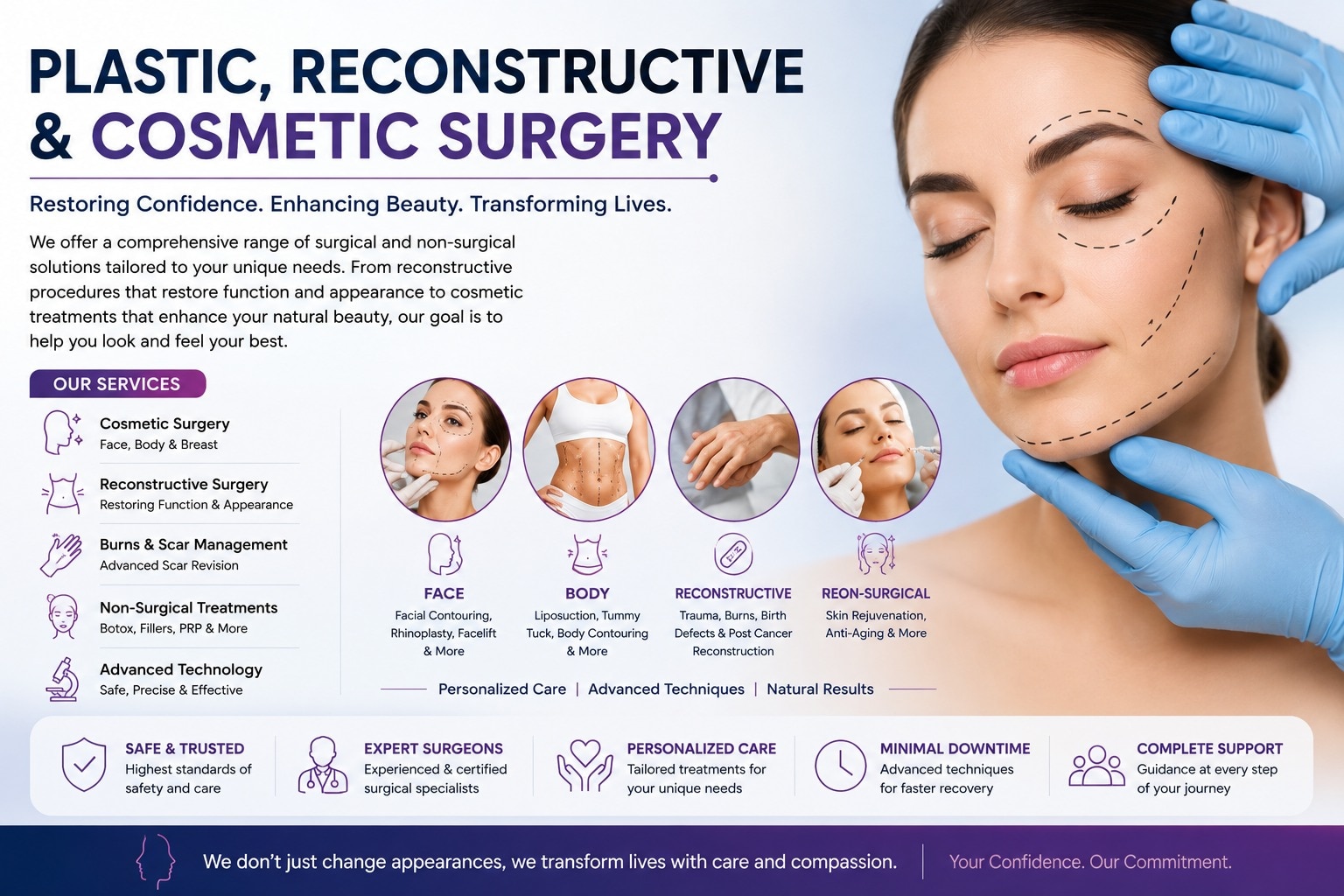
PLASTIC, RECONSTRUCTIVE & COSMETIC SURGERY PLASTIC, RECONSTRUCTIVE & COSMETIC SURGERY Our Plastic, Reconstructive & Cosmetic Surgery services combine advanced surgical techniques with personalized care to restore function, improve... View service → |
Frequently asked questions
What is the difference between reconstructive and cosmetic surgery?
Reconstructive surgery repairs tissue, movement, protection, or form after trauma, burns, infection, congenital differences, cancer treatment, or previous surgery. Cosmetic surgery changes an otherwise normal feature for appearance.
When does trauma reconstruction need urgent care?
Seek urgent assessment for severe bleeding, exposed bone or tendon, crushed tissue, major burns, contaminated wounds, loss of sensation, or sudden loss of movement. Reconstruction may then occur in stages after the injury is stabilised.
How can daily limitations help identify the right surgical goal?
Difficulty walking, gripping, closing an eye, breathing, eating, or protecting a wound points toward a functional or reconstructive goal. Dissatisfaction with a normal feature without impaired function points toward a cosmetic goal.
What should you ask during a plastic surgery consultation in Pune?
Ask which problem the operation addresses, what alternatives exist, how many stages you may need, expected recovery limits, possible complications, follow-up arrangements, and what happens if the result differs from the plan.
How should you compare a plastic surgeon in Kharadi or elsewhere in Pune?
Compare relevant experience, the hospital’s operating and emergency facilities, anaesthesia support, infection-control practices, accreditation details, complication management, and the clarity of aftercare—not location alone.