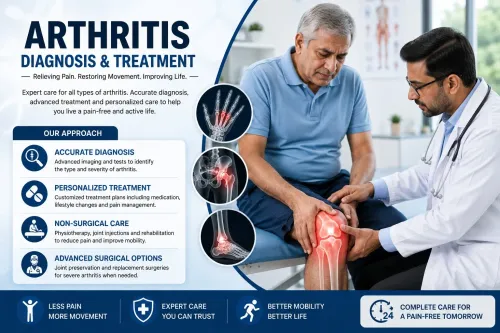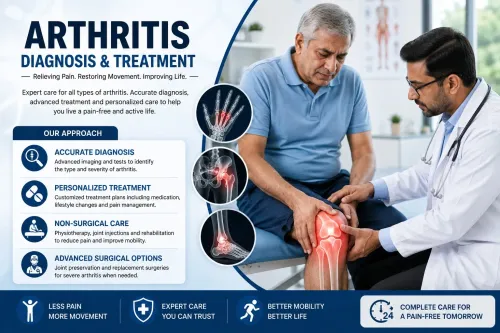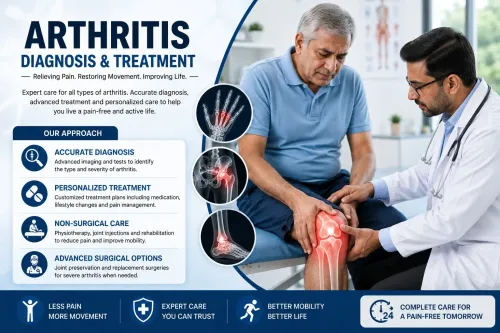


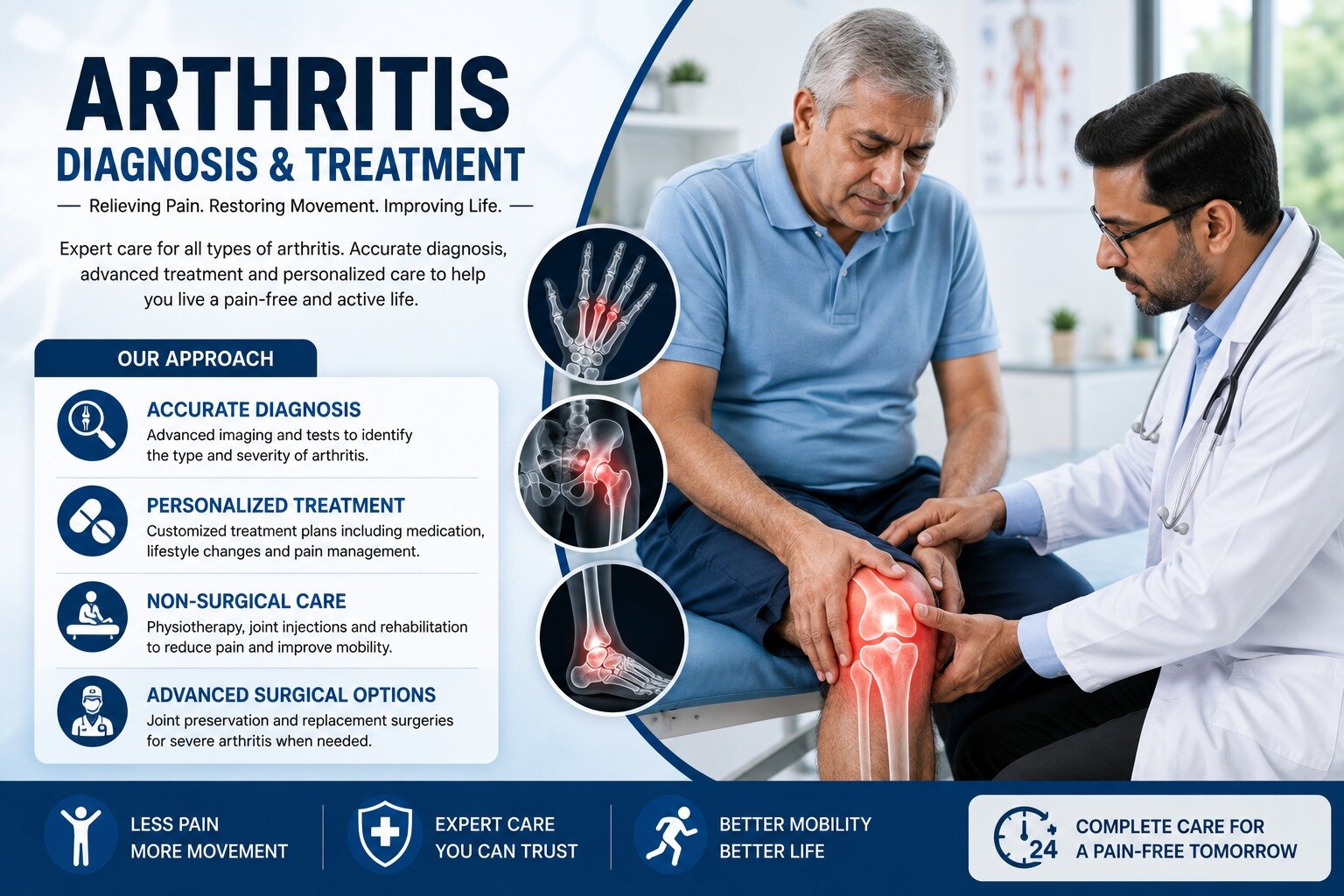
Joint pain is a symptom, not a diagnosis: osteoarthritis, rheumatoid arthritis, gout, psoriatic arthritis, infection and injuries need different decisions. By matching your pain, stiffness, swelling, weakness or loss of movement to the likely cause, you can prepare for the right examination, tests and treatment discussion.
Key takeaways
- Activity-related pain with brief stiffness often points to osteoarthritis.
- Blood tests and X-rays help distinguish inflammatory, degenerative and crystal arthritis.
- Use exercise, weight management and targeted medicines alongside pain relief.
- Discuss disease-modifying drugs or surgery when inflammation or joint damage persists.
What does your symptom pattern suggest about the cause?
Activity-related pain with no morning stiffness, or stiffness lasting 30 minutes or less, fits osteoarthritis in many adults aged 45 or over. The pattern matters more than choosing an injection or scan from the label “joint pain.”
Look for these clues:
- Prolonged morning stiffness, persistent swelling in several joints, or pain in the small joints of the hands and feet points toward rheumatoid arthritis or another inflammatory condition.
- Sudden, intensely painful swelling in the big toe, ankle or knee raises gout as a possibility.
- Psoriasis, nail pitting, or a sausage-shaped finger or toe supports consideration of psoriatic arthritis.
- A hot, swollen joint with severe pain, fever, rapid worsening, feeling unwell, or inability to bear weight needs same-day assessment for septic arthritis.
- Sudden inability to use a limb after a serious injury needs urgent evaluation.
Do not wait for a routine appointment or steroid injection when infection is possible. Joint aspiration and synovial-fluid analysis help distinguish septic arthritis from crystal arthritis, and new weakness, numbness, loss of bladder or bowel control, or difficulty walking with spine pain requires emergency assessment.
Arrange an assessment with an arthritis doctor in Kharadi for persistent pain, recurrent swelling, night pain, progressive loss of function, stiffness lasting beyond the morning, or symptoms affecting several joints.
Which tests can identify the arthritis affecting your joint?
Arthritis diagnosis in Pune starts with your symptom pattern, medical history and joint examination—not with a scan. No single test can distinguish osteoarthritis, rheumatoid arthritis, gout, psoriatic arthritis and infection in every patient.
The clinician will ask when symptoms began, which joints are affected, whether pain follows activity or occurs at rest, and how long morning stiffness lasts. Tell them about psoriasis, fever, previous injuries, family history, work demands and current medicines. Examination checks swelling, warmth, tenderness, deformity, muscle strength and range of motion.
Blood tests support the diagnosis when inflammatory arthritis is suspected, but they do not replace examination.
| Test | What it can show | Important limitation |
|---|---|---|
| Rheumatoid factor and anti-CCP antibody | Evidence supporting rheumatoid arthritis | A positive result does not prove active disease, and a negative result does not exclude it |
| ESR and CRP | Inflammation in the body | Normal results do not rule out every inflammatory condition |
| X-ray | Joint-space narrowing, alignment and bone changes | Structural damage may be mild with severe pain, or advanced with little pain |
| Ultrasound or MRI | Fluid, tendon problems, inflammation, cartilage, bone marrow and ligaments | The finding matters only if it changes treatment |
Typical osteoarthritis in an adult aged 45 or over with activity-related pain and morning stiffness lasting 30 minutes or less often needs no routine X-ray. A hot, swollen joint with severe pain, fever, feeling unwell, rapid onset or inability to bear weight needs same-day assessment.
If infection or crystal arthritis is possible, joint aspiration and synovial-fluid analysis are central; do not inject steroids until infection has been considered. Ask how each proposed test will change treatment for your knee, hip, shoulder, hand, foot, ankle or spine.
Which non-surgical treatment matches pain, stiffness or weakness?
Pain that worsens with activity usually calls for an active plan, not complete rest. Match joint pain treatment in Kharadi to the symptom, affected joint, fitness level and other health conditions.
| Symptom | Useful starting approach | Important limit |
|---|---|---|
| Pain with activity | Strengthening plus aerobic exercise; topical NSAID for knee osteoarthritis | Oral NSAIDs need stomach, kidney, liver and cardiovascular checks, plus possible gastroprotection |
| Stiffness or reduced range of motion | Range-of-motion exercise, heat, pacing and activity modification | Manual therapy or massage belongs alongside exercise, not instead of it |
| Weakness or poor balance | Progressive strengthening and balance training | A short flare after exercise does not automatically mean damage; adjust the load with professional guidance |
| Swelling or a short-lived flare | Cold for a brief period, activity reduction and clinical review if it persists | Corticosteroid injection may give short-term relief, but it does not repair the joint |
| Knee, ankle, foot or hip difficulty | A correctly fitted brace, cane, walker or shoe insert | Poor fit or technique can increase strain and reduce confidence |
If you are overweight or living with obesity, combine dietary support with exercise. Any weight loss can help; around 10% of body weight may provide more benefit than 5% when feasible. Add sleep support and rehabilitation to the plan.
For arthritis treatment options in Kharadi, ask how each treatment supports your goals. Strong opioids, routine glucosamine and paracetamol as the main osteoarthritis treatment are poor substitutes for exercise-based care. An assessment should also account for deformity, work demands and daily function before medication or injection decisions.
When do you need disease-modifying treatment rather than pain relief?
Pain relief is not disease control. Analgesics and NSAIDs can ease discomfort from rheumatoid arthritis, psoriatic arthritis or gout, but they do not stop immune-driven inflammation or crystal accumulation.
| Treatment | What it does | When it fits |
|---|---|---|
| Analgesic or NSAID | Reduces pain and inflammation | Short-term symptom relief, with checks for stomach, kidney, liver and cardiovascular risks |
| DMARD | Slows immune-driven joint damage | Rheumatoid arthritis and some other inflammatory arthritis after specialist assessment |
| Colchicine or corticosteroid | Calms acute inflammation | A gout flare when the medicine is appropriate for you |
| Urate-lowering medicine | Reduces future urate crystal attacks and complications | Long-term gout prevention, guided by repeated serum urate tests |
Rheumatoid arthritis may require a conventional synthetic DMARD such as methotrexate, leflunomide or sulfasalazine. Prompt treatment after specialist assessment matters because repeated painkiller use can mask symptoms while joint damage progresses.
The choice and monitoring plan depend on disease activity, other conditions, pregnancy plans, infection risk and previous medicines. Never start or stop a DMARD without the prescribing clinician.
A symptom-free gout day does not prove that urate control is adequate. Serial serum urate measurements guide dose adjustment.
Persistent swelling, prolonged morning stiffness, fatigue, psoriasis, or symptoms in several joints warrants rheumatology evaluation. Arthritis care in Pune should also include education, pacing, activity modification, sleep support, rehabilitation and a written flare-management plan.
When should you escalate treatment or discuss surgery?
Arrange an appointment with an arthritis doctor in Kharadi when pain continues despite an appropriate exercise and medication plan, movement is steadily declining, sleep is disturbed, or work and daily tasks are becoming difficult. Trying another painkiller is not always the next useful step.
Before the consultation, note:
- Which joints hurt, how long symptoms have lasted, and whether stiffness follows rest or activity
- Your walking tolerance, work demands, affected joints and personal goals
- Swelling, previous injuries, current medicines, smoking status and other illnesses
- Which exercises, medicines, injections, braces or other treatments you have already tried
For knee, hip, shoulder, hand, foot or ankle arthritis, escalation can mean a revised rehabilitation plan, an injection discussion, an orthotic, a walking aid or a surgical referral. Exercise, pacing, activity modification, sleep support and rehabilitation remain part of arthritis care in Pune; manual therapy or massage should support therapeutic exercise, not replace it.
Spine pain needs separate assessment when weakness, numbness or changes in walking appear. Joint-replacement referral depends on pain, functional limitation, unsuccessful non-surgical care, surgical risk and your preferences—not an X-ray score alone. Age, sex, smoking status and body-mass index should not automatically block referral.
At Isha Trauma Care Hospital in Kharadi, Pune, an orthopedic consultation can help compare arthritis treatment options in Kharadi against your findings, risks and goals before choosing injections or surgery.
Related services
ARTHRISTIS -DIAGNOSIS & TREATMENT ARTHRISTIS -DIAGNOSIS & TREATMENT Our Arthritis Diagnosis & Treatment services provide comprehensive care for patients experiencing joint pain, stiffness, swelling, and reduced... View service → |
Advanced Joint Replacement Surgery in Pune State-of-the-art knee and hip replacement at Isha Trauma Care, Kharadi. View service → |
Frequently asked questions
What does your symptom pattern suggest about the cause of arthritis?
Activity-related pain with morning stiffness lasting 30 minutes or less often fits osteoarthritis. Prolonged stiffness, swollen joints, warmth or symptoms in several joints need assessment for inflammatory arthritis. Sudden severe pain with redness can indicate crystal arthritis or infection.
Which tests can identify the arthritis affecting your joint?
A clinician may use a joint examination, X-ray, ultrasound or MRI. Blood tests such as rheumatoid factor, anti-CCP antibodies, ESR and CRP help assess inflammatory arthritis, while joint-fluid analysis can identify crystals or infection.
Which non-surgical treatment matches pain, stiffness or weakness?
Treatment can include physiotherapy, strengthening and range-of-motion exercises, activity modification, weight management, heat or ice, topical medicines and prescribed oral pain relievers. The choice depends on your diagnosis, affected joint and other health conditions.
When do you need disease-modifying treatment rather than pain relief?
Persistent swelling, prolonged morning stiffness, multiple affected joints or abnormal inflammatory blood tests warrant assessment by a rheumatology specialist. Disease-modifying antirheumatic drugs treat inflammatory arthritis; pain medicine alone does not prevent joint damage.
When should you escalate arthritis treatment or discuss surgery?
Escalate care when pain, stiffness or weakness limits walking, sleep, work or daily activities despite an appropriate non-surgical plan. Discuss surgery when imaging shows advanced joint damage and symptoms remain disabling. Seek urgent care for a hot swollen joint with fever or sudden inability to bear weight.
Related services
Sports Medicine Advanced arthroscopic surgery and sports injury rehabilitation at Isha Trauma Care, Kharadi. View service → |
ARTHROPLASTY ( JOINT REPLACEMENT SURGERY ) ARTHROPLASTY ( JOINT REPLACEMENT SURGERY ) Our Arthroplasty (Joint Replacement Surgery) services provide advanced treatment for patients suffering from severe joint pain, arthritis, stiffness,... View service → |
PHYSIOTHERAPY PHYSIOTHERAPY Our Physiotherapy services are designed to help patients reduce pain, restore movement, improve strength, and return to their daily activities with... |
ARTHROSCOPIC KNEE & SHOULDER SURGERY ARTHROSCOPIC KNEE & SHOULDER SURGERY Our Arthroscopic Knee & Shoulder Surgery services offer advanced, minimally invasive treatment for a wide range of joint problems and sports-related... View service → |