A serious injury may need more than fracture fixation or a closed skin wound: exposed bone, crushed fingers, burns, tissue loss, facial damage, and restricted movement can require reconstruction. You will learn when emergency trauma care comes first, which reconstructive methods may be considered, what recovery and costs involve, and how to compare care options in Pune.
Key takeaways
- Exposed bone, tendon, nerves, or hardware needs durable tissue coverage.
- Surgeons select closure, skin grafts, or flaps based on tissue depth and blood supply.
- Emergency cleaning and stabilization come before definitive reconstruction.
- Compare hospitals by reconstructive expertise, trauma coordination, and rehabilitation support.
Which injuries need reconstruction, and what must happen first?
Exposed bone or tendon needs durable soft-tissue coverage, not simply stitches. Plastic reconstructive surgery after injury in Pune can protect bone, joints, nerves, blood vessels, and fixation hardware while restoring movement after tissue loss. It may involve grafts, flaps, tendon or nerve repair, and facial, hand, foot, or limb reconstruction.
| Injury | Why reconstruction may be needed |
|---|---|
| Open fracture | Covers exposed bone and protects fracture fixation |
| Severe burn | Replaces lost skin and limits contracture |
| Crushed finger | Restores coverage while preserving tendon, nerve, artery, and joint function |
| Facial wound | Rebuilds tissue and supports expression, breathing, or vision |
| Non-healing wound | Covers tissue that cannot close safely |
| Amputation | Shapes and covers the residual limb for healing and later function |
| Contracture | Releases tight scar tissue that restricts movement |
Call emergency services for airway or breathing problems, uncontrolled bleeding, shock, major blood loss, pale or blue digits, loss of sensation, severe contamination, or suspected compartment syndrome.
Cover an open wound with a clean dressing, do not push tissue or bone back inside, immobilize the area, and avoid food or drink when emergency surgery is possible.
If you need reconstructive surgery after accident in Pune, definitive repair comes after trauma stabilization:
- Resuscitation and bleeding control.
- Intravenous antibiotics and tetanus assessment.
- Surgical irrigation and debridement of contaminated or dead tissue.
- Fracture stabilization.
- Blood-flow restoration before graft, flap, or other reconstruction.
Reconstruction may be immediate or staged. A clean wound can be repaired promptly; swelling, infection, or contamination often requires temporary treatment first.
How do surgeons choose between closure, grafts, and flaps?
The pathway starts with wound quality, tissue loss, blood flow, and the structures left exposed—not appearance alone. A clean wound with enough loose skin and an intact blood supply may heal without surgery or allow direct closure. After contamination, swelling, dead tissue, or infection, delayed closure is safer.
| Option | What it means | When it applies |
|---|---|---|
| Direct closure | Edges are brought together | Clean, shallow wound with mobile skin and safe circulation |
| Skin graft | Thin skin is placed over a prepared wound bed | Clean, vascular tissue is present; not bare cortical bone, uncovered tendon, cartilage, or poorly vascularized hardware |
| Flap | Local, regional, or free tissue moves with its own blood supply | Exposed bone, tendon, joint, nerve, vessel, or hardware; dead space; demanding wounds |
A graft cannot reliably survive on bare cortical bone or exposed tendon without a covering layer. A flap supplies skin, fat, fascia, or muscle, but adds microsurgical complexity, blood-clot blockage, partial or total tissue loss, and donor-site problems.
Assessment includes wound examination; X-rays or CT for fractures and foreign bodies; Doppler studies for circulation; and checks of nerve, tendon, and vascular function. In plastic surgery for injury in Pune, surgeons use these findings to choose closure, grafting, flap coverage, or staged treatment.
Hand, facial, and amputation injuries need coordinated specialist assessment because function and blood flow can be as important as skin coverage.
When is reconstruction performed, and what does recovery demand?
Immediate repair is appropriate when you are stable, the wound is clean enough, and the tissue has a reliable blood supply. Surgeons may close the wound or perform a graft or flap during the first operation.
Staged reconstruction begins with debridement, temporary negative-pressure wound treatment, and fracture stabilization. Negative pressure controls fluid and swelling while the team prepares the wound for coverage; it does not replace debridement or definitive closure. Delay can be deliberate while infection, swelling, or contamination improves, but prolonged exposure raises the risks of tissue loss and infection.
1. Expect dressings, drains, splints, limb elevation, frequent wound checks, and restrictions on lifting, hand use, or weight-bearing. Further operations may be needed for coverage, fixation, tendon or nerve repair, or wound problems.
2. Begin physiotherapy or hand therapy when the surgeon permits it. After tendon, nerve, flap, graft, or fracture treatment, therapy must protect the repair while preventing stiffness, weakness, and adhesions; returning too early can damage healing tissue, while excessive immobilization limits movement.
3. Care for the scar after closure. Massage, silicone sheets or gel, pressure therapy, and steroid treatment can improve troublesome scars, while later scar revision or contracture release can address persistent tightness or appearance.
Reconstructive surgery after accident in Pune can restore coverage and function without recreating normal skin. Discuss infection, delayed healing, numbness, altered sensation, visible scars, stiffness, graft or flap failure, repeat surgery, donor-site problems, and prolonged rehabilitation before choosing treatment.
How should you compare a reconstructive surgery hospital in Pune?
Choose a reconstructive surgery hospital in Pune by its trauma capability, not by the service label. A hospital treating an open fracture, crushed hand, burn, or facial wound needs coordinated care, imaging, blood support, infection management, and rehabilitation under one plan.
| Check | Ask directly | Warning sign |
|---|---|---|
| Surgeon’s experience | How regularly do you treat this exact injury? | Vague answers about “all cases” |
| Team coverage | Can orthopedics, plastic surgery, vascular or hand surgery, anesthesia, microsurgery, and rehabilitation coordinate here? | You must arrange separate hospitals |
| Emergency capacity | Is emergency access, an operating room, anesthesia, blood support, and imaging available? | Transfer is discussed after admission |
| Complication plan | Who manages infection, bleeding, thrombosis, or flap failure? | No named responsible team |
| Aftercare | Who reviews wounds, drains, grafts, and function after discharge? | Follow-up ends at discharge |
During consultation, ask whether bone fixation must precede soft-tissue coverage. Ask which graft, local flap, regional flap, or free flap is proposed; where the donor site will be; how many operations and hospital days are expected; how long rehabilitation may take; and where scars will lie.
Also ask what happens if graft or flap tissue does not survive. Isha Trauma Care Hospital should be checked directly for plastic specialists, microsurgical reconstruction, burns care, free-flap surgery, skin grafting, and coordinated plastic and orthopedic trauma care; the service label alone confirms none of these.
Related service
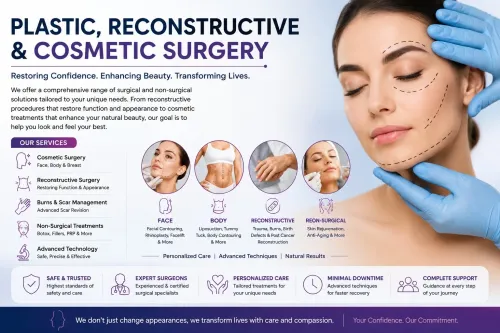
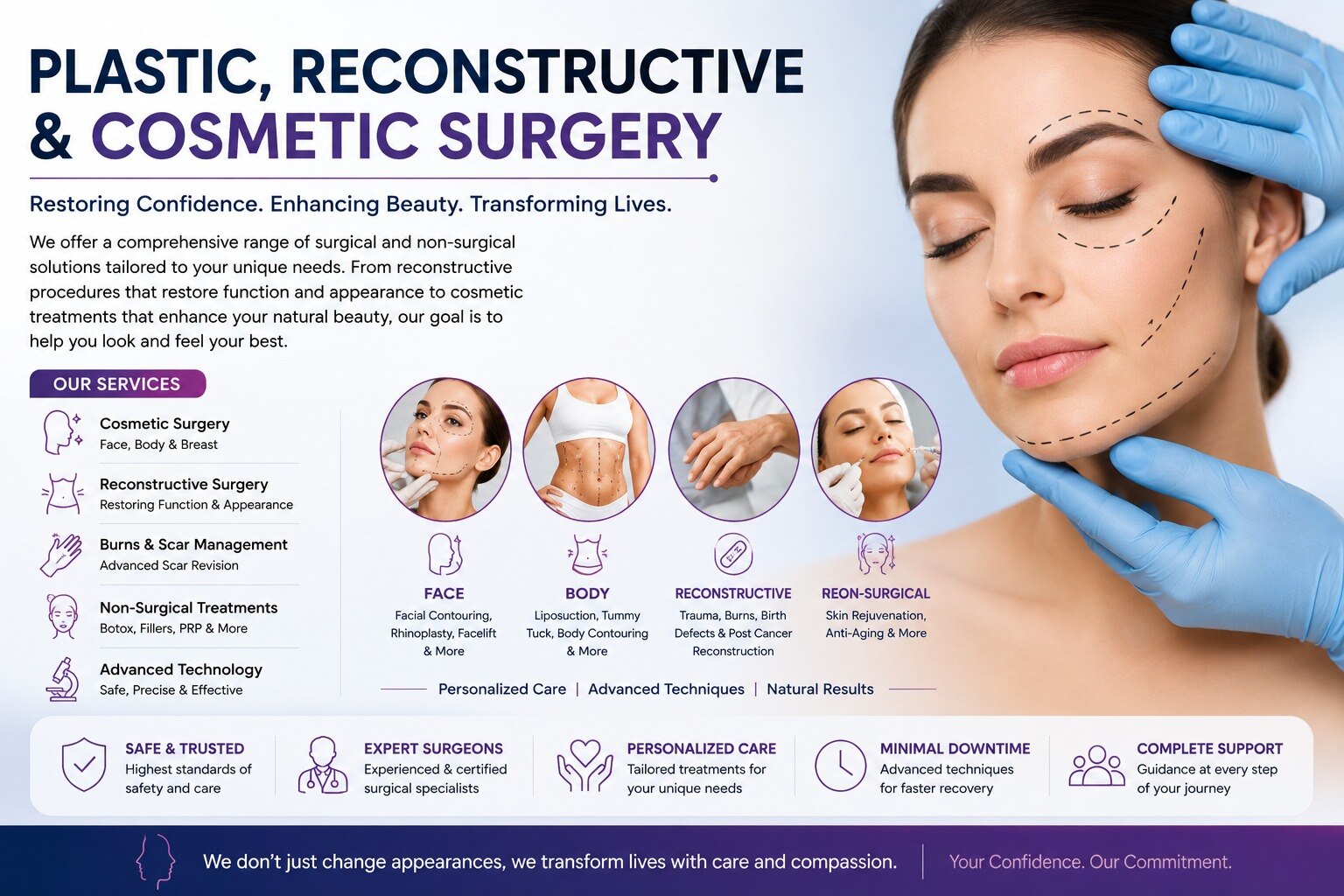
PLASTIC, RECONSTRUCTIVE & COSMETIC SURGERY PLASTIC, RECONSTRUCTIVE & COSMETIC SURGERY Our Plastic, Reconstructive & Cosmetic Surgery services combine advanced surgical techniques with personalized care to restore function, improve... View service → |
How do reconstructive and cosmetic surgery differ after an injury?
Reconstruction repairs damaged tissue or lost function; cosmetic surgery changes appearance in otherwise intact anatomy. Reconstruction is the appropriate choice when injury threatens coverage, blood flow, sensation, movement, tendon glide, nerve recovery, or limb survival.
Cosmetic and reconstructive surgery in Pune can overlap during scar revision or facial repair, but trauma surgery may prioritize durable healing over an immediately ideal appearance.
| Type | Main purpose | Typical priority |
|---|---|---|
| Reconstructive | Restore tissue, function, sensation, coverage, or circulation | Safe healing and durable repair |
| Cosmetic | Change shape, contour, or visible appearance | Aesthetic balance |
| Overlapping | Improve a healed scar or facial deformity after repair | Function first, appearance as healing permits |
Do not treat reconstruction as the first step during uncontrolled bleeding, airway compromise, major blood loss, untreated infection, unstable fractures, shock, or another injury requiring resuscitation.
Surgeons also assess contamination, circulation, diabetes, smoking, medicines, bone stability, infection, and whether you can complete physiotherapy or hand therapy; these factors influence timing and the risk of failed healing.
Plan financially for imaging, anesthesia, implants or fracture fixation, dressings, medicines, hospital days, repeat procedures, physiotherapy, compression garments, and time away from work. Preserve accident photographs, medical reports, bills, prescriptions, discharge papers, employer documents, and police records for insurance, employer coverage, medico-legal paperwork, or third-party claims.
Frequently asked questions
Which injuries may need reconstructive surgery after an accident in Pune?
Severe wounds with exposed bone, tendon, nerves, blood vessels, joints, or fixation hardware may need reconstruction. Tissue loss involving the face, hand, foot, or limb also requires specialist assessment.
How do surgeons choose between closure, skin grafts, and flaps?
Simple closure suits wounds whose edges come together without tension. Skin grafts cover suitable wounds with a healthy blood supply, while flaps bring their own blood supply when deeper structures need durable protection.
When is reconstruction performed after an injury?
First, doctors control bleeding, clean the wound, assess damaged structures, and stabilize fractures or other injuries. Definitive reconstruction follows when the wound and the patient are ready; urgent coverage is needed when bone, tendon, nerves, vessels, or hardware are exposed.
What should you compare when choosing a reconstructive surgery hospital in Pune?
Ask about trauma and reconstructive surgery experience, access to orthopedic and plastic surgery teams, microsurgical capability when needed, wound care, anesthesia, imaging, and rehabilitation after discharge.
How does reconstructive surgery differ from cosmetic surgery after an injury?
Reconstructive surgery restores protection, function, movement, and damaged anatomy after injury. Cosmetic surgery primarily changes appearance when tissue protection and function do not require repair.