A child’s orthopedic visit can involve much more than an X-ray or an operation: it may include growth assessment, gait evaluation, imaging, casting, bracing, rehabilitation, and long-term monitoring. By the end, you will know what happens from the first appointment through recovery, which warning signs need urgent attention, and how to compare pediatric orthopedic services in Pune.
Key takeaways
- Bring scans, prescriptions, injury records, and previous treatment details.
- Expect movement, growth, pain, and daily-function assessments at the first visit.
- Fracture care includes imaging, alignment checks, immobilization, follow-up, and rehabilitation.
- Compare pediatric care by specialist expertise, emergency access, imaging, and recovery support.
What happens at the first pediatric orthopedic appointment?
At the first visit, a pediatric orthopedic doctor in Pune reviews the child’s symptoms, growth, movement, and daily function before recommending treatment. The doctor asks when the problem began, whether pain follows an injury, and whether it affects walking, school, sleep, play, or sports. Bring prior scans, prescriptions, injury records, and information about previous treatment.
The examination may include:
- Measuring height, limb length, and alignment, then comparing both sides
- Watching the child walk, run, stand, or climb when appropriate
- Testing joint movement, muscle strength, reflexes, sensation, and circulation
- Checking the spine, hips, knees, feet, and growth pattern for asymmetry or progression
If you searched “pediatric orthopedic care in Pune what is included,” the first appointment is also where the doctor separates normal developmental variation from a problem needing observation, physiotherapy, bracing, casting, or further evaluation.
| Concern | What the doctor assesses | Possible next step |
|---|---|---|
| Fracture or growth-plate injury | Tenderness, swelling, deformity, circulation, and movement | Imaging, immobilisation, or urgent treatment |
| Bowed legs, knock knees, or unequal limbs | Alignment, limb measurements, age, and progression | Reassurance, monitoring, or correction planning |
| Hip dysplasia or clubfoot | Hip stability, foot position, and function | Specialist treatment and follow-up |
| Scoliosis or gait change | Spinal curve, posture, balance, and neurological signs | Observation, imaging, therapy, or referral |
Children also commonly present with flat feet, congenital limb differences, infections, tumors, and sports injuries. Persistent, painful, asymmetric, or worsening findings deserve assessment.
Which tests and treatments are chosen for a growing child?
A children bone doctor in Pune begins with the child’s history: birth and developmental milestones, pain, injury, fever, activity limits, and changes in height or limb shape. Examination includes walking and running, limb-length measurement, hip and knee motion, muscle strength, reflexes, sensation, pulses, and the child’s growth pattern.
Persistent, asymmetric, painful, or worsening bowing, knock knees, flat feet, or gait change deserves assessment rather than assumption that it is normal.
| Test or finding | What it helps assess | Treatment decision it may support |
|---|---|---|
| Growth and alignment concern | Standing X-rays, limb measurements, and sometimes a bone-age X-ray | Observation, physiotherapy, bracing, or correction when deformity progresses or affects function |
| Infant hip concern | Ultrasound before the hip bones mature; X-ray at an older age | Positioning harness, reduction, or later reconstruction according to age and hip development |
| Fracture or growth-plate injury | X-ray; MRI or CT when the injury is unclear or complex | Casting, reduction, surgery, and scheduled checks for growth arrest or angular change |
| Possible infection, inflammatory disease, or tumour | Blood count, C-reactive protein, erythrocyte sedimentation rate, calcium and vitamin D tests, MRI, or biopsy referral | Antibiotics, disease-specific treatment, or specialist surgical care |
Normal developmental variation often needs reassurance and review, not corrective surgery. A pediatric orthopedic doctor in Pune uses imaging when examination cannot show the bone, growth plate, cartilage, or deep joint clearly; blood tests are not routine for every limp or deformity. Follow-up compares growth, alignment, movement, and symptoms over time.
What does pediatric fracture treatment involve from injury to healing?
A suspected fracture needs immobilisation before transport: keep the child still, support the limb in its found position, cover an open wound with a clean dressing, and remove rings or tight clothing. Do not straighten the bone or push it back.
Seek emergency care immediately for heavy bleeding, exposed bone, blue or cold fingers or toes, numbness, inability to move, severe deformity, or skin stretched tightly over the injury.
At the hospital, the clinician records how the injury happened and checks swelling, tenderness, movement, circulation, and sensation below the fracture. X-rays usually confirm the location and alignment; growth-plate injuries can be subtle, so the doctor may compare views, repeat imaging, or arrange specialist review.
Pediatric fracture treatment in Pune should include assessment of growth remaining because damage to a growth plate can later cause growth arrest, angular deformity, or a limb-length difference.
Treatment follows the fracture’s position and stability:
- A stable fracture may receive a splint first, followed by a plaster or fiberglass cast.
- A displaced fracture may need reduction, meaning the doctor realigns the bone, with pain relief or sedation.
- An open fracture, threatened skin, nerve or blood-vessel problem, severe displacement, or unstable pattern needs urgent orthopedic treatment and may require surgery, pins, screws, or plates.
- Give only weight-based paracetamol or ibuprofen as advised; never give aspirin to a child unless prescribed.
Follow-up checks the cast, pain, circulation, alignment, and healing with scheduled examination or X-rays. Growth-plate injuries need longer surveillance, even after swelling and pain settle. Keep the cast dry, raise the limb initially, and return urgently for worsening pain, numbness, colour change, fever, foul odour, or a broken cast.
How are congenital, growth-related, spine, and sports conditions managed?
Pediatric orthopedic care in Pune includes observation, physiotherapy, casting, bracing, medicines, rehabilitation, and surgery. A children bone doctor in Pune chooses among them according to the child’s age, remaining growth, deformity, pain, and effect on movement.
- Clubfoot: Serial Ponseti casting and a foot-abduction brace correct many cases; Achilles tenotomy or surgery is used when the foot remains rigid or relapses.
- Hip dysplasia: An infant may need a positioning harness. Older children may require closed or open reduction, sometimes with a pelvic or femoral osteotomy.
- Limb differences: Shoe lifts, prostheses, physiotherapy, and observation support function; limb-lengthening, shortening, guided growth, or reconstruction addresses major discrepancies.
- Bowed legs and knock knees: Normal age-related alignment is observed. Persistent, asymmetric, painful, or worsening deformity may need guided-growth plates or corrective osteotomy.
- Scoliosis: Small curves are monitored; exercises and bracing can slow progression, while severe or worsening curves may need spinal fusion.
- Flat feet: Supportive footwear, orthoses, stretching, and strength work help painful flexible feet. Surgery is reserved for persistent pain or rigid deformity.
- Infections and tumors: Antibiotics, drainage, and immobilisation treat many infections; biopsy, curettage or resection, and oncology treatment guide tumor care.
- Sports injuries: Activity restriction, ice, bracing, casting, and structured rehabilitation protect open growth plates. Displaced fractures or damaged cartilage, ligaments, or joints may require fixation or repair.
Rehabilitation restores motion, strength, gait, balance, and sport-specific function. Return to play follows testing, not pain relief alone.
How can families compare pediatric orthopedic care in Pune and plan recovery?
A reliable child orthopedic hospital in Pune should handle more than consultation. Check for pediatric imaging, fracture reduction and casting, pediatric anesthesia if surgery is possible, emergency circulation and nerve checks, and scheduled rehabilitation. A clinic offering only an opinion may refer you elsewhere for urgent treatment.
| Check | What to confirm | Why it matters |
|---|---|---|
| Pediatric imaging | X-ray access and review by the treating team | Delays can worsen displaced fractures or growth-plate injuries |
| Treatment capacity | Splinting, casting, reduction, surgery, and pediatric anesthesia | One referral chain reduces repeated examinations |
| Recovery service | Physiotherapy, gait and balance training, braces, and return-to-sport guidance | Rehabilitation continues after the cast or operation |
| Emergency access | A named contact, after-hours instructions, and a facility for neurovascular assessment | Increasing pain, numbness, blue or cold fingers, or a tight cast needs prompt review |
Bring previous X-rays and reports, the child’s medicines and allergy details, vaccination or medical records, and a written injury timeline. Also bring the current cast, brace, or footwear if the clinician needs to inspect fit and wear.
Ask for the next appointment date, cast-care instructions, weight-bearing limits, school and sports restrictions, exercises, and warning signs. Pediatric fracture treatment in Pune is incomplete without follow-up imaging when advised and a clear plan for movement recovery.
For families comparing pediatric orthopedic care in Pune what is included, ask whether growth and skeletal maturity guide decisions. When comparing Isha Trauma Care Hospital with another provider, use the same checklist rather than choosing on consultation alone.
Related services
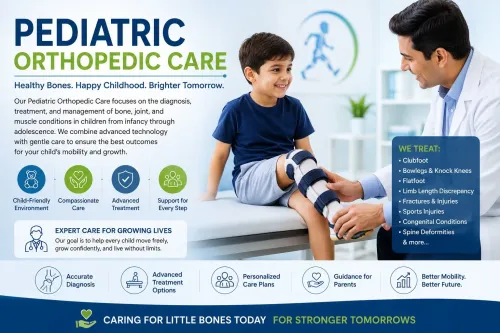
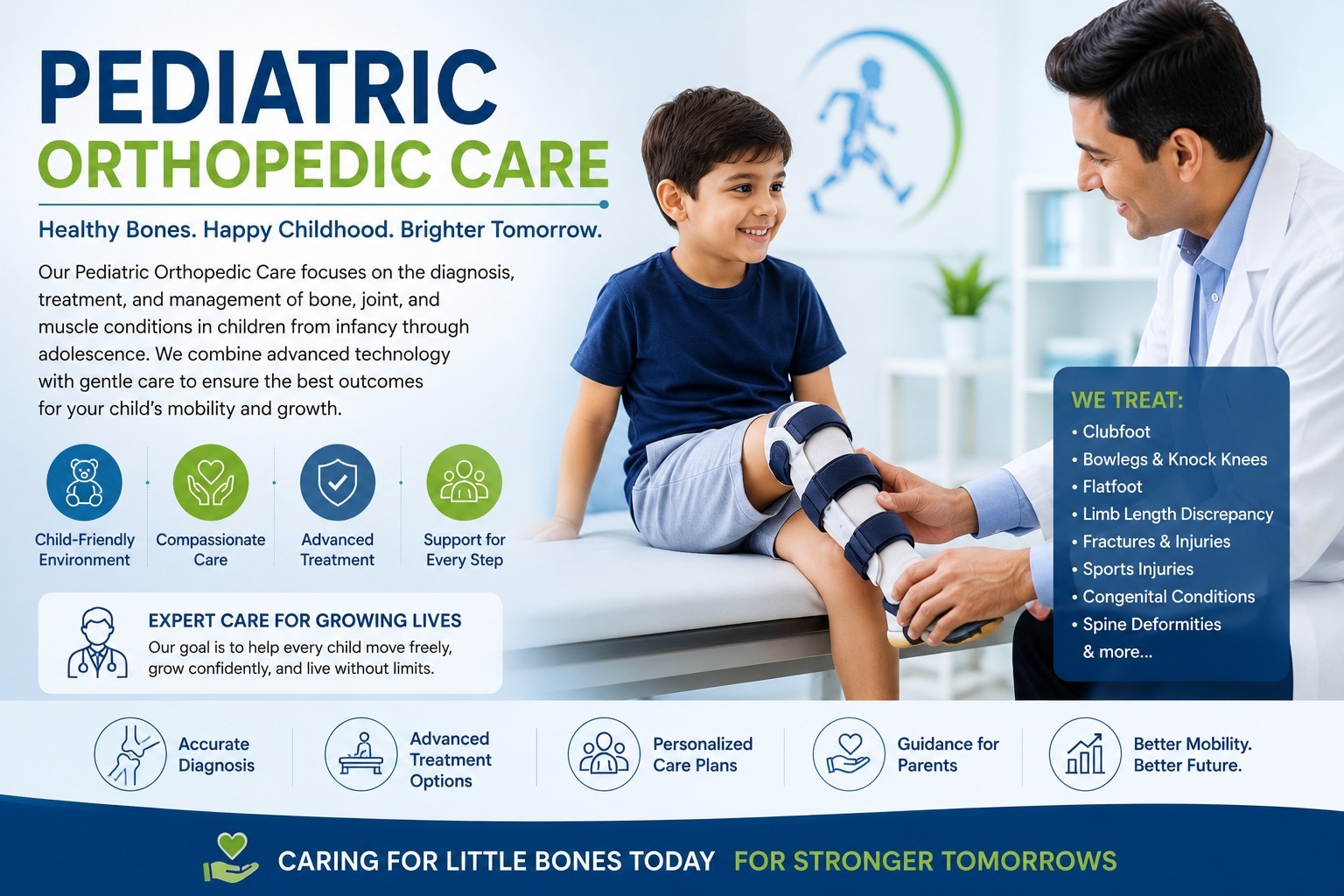
Pediatric Orthopedic Care Our Pediatric Orthopedic Care services are dedicated to the diagnosis, treatment, and management of bone, joint, muscle, and growth-related... View service → |
FRACTURE TREATMENT & SURGERY Our Fracture Treatment & Surgery services provide comprehensive care for all types of fractures, from simple fractures to complex and multiple... View service → |
Frequently asked questions
What happens at the first pediatric orthopedic appointment?
The pediatric orthopedic doctor reviews symptoms, growth, movement, and daily function. Bring scans, prescriptions, injury records, and previous treatment details.
Which tests and treatments are chosen for a growing child?
The doctor selects tests based on the child’s symptoms and examination. Options can include X-rays and other imaging, observation, physiotherapy, medication, bracing, casting, or surgery.
What does pediatric fracture treatment involve from injury to healing?
Care may include an examination, X-rays, fracture alignment, a cast or brace, pain management, repeat imaging, cast removal, and rehabilitation before normal activity resumes.
How are congenital, growth-related, spine, and sports conditions managed?
Management depends on the condition and its effect on growth and function. Care can include monitoring, physiotherapy, braces, activity changes, specialist treatment, or surgery.
How can families compare pediatric orthopedic care in Pune and plan recovery?
Compare pediatric expertise, emergency access, imaging, treatment options, follow-up arrangements, physiotherapy, communication, and the expected return-to-school or sports timeline.
Related service
PHYSIOTHERAPY PHYSIOTHERAPY Our Physiotherapy services are designed to help patients reduce pain, restore movement, improve strength, and return to their daily activities with... |